Islands’ relationships with the globalised world.
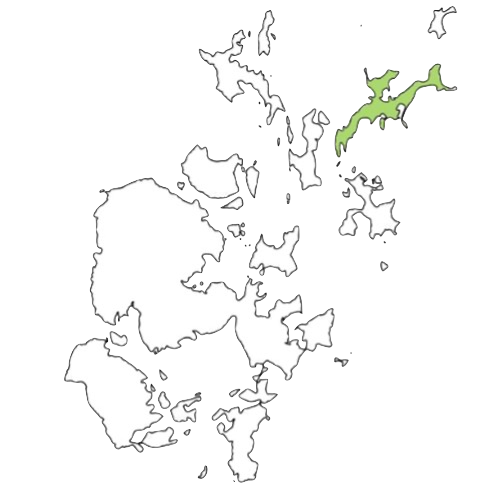
This project is set on Sanday, an island in Orkney, with a population of around 550. The experience of living there is largely defined by the fact that it is an island in a globalised world.
Sanday has an ageing population.
We live in a world in which advancements in care have led to increased longevity. Population ageing is disproportionately an issue of rural and island locations.
At the same time, other symptoms of our globalised world have brought new challenges in how we care for these ageing populations.
For example, services become increasingly centralised.
Centralisation can mean that a service designed for an urban setting becomes the status quo, and finds itself out of place in rural and island communities….
The experience of living on Sanday is largely defined by a relationship to the mainland. Residents rely on their link with Kirkwall, on the Orkney mainland for core services and amenities: a high school, supermarkets, a hospital. While there is an expectation to travel and a complex dependence on the mainland, connections can be disrupted because of the weather, transport links and mobility – to name only a few key barriers.
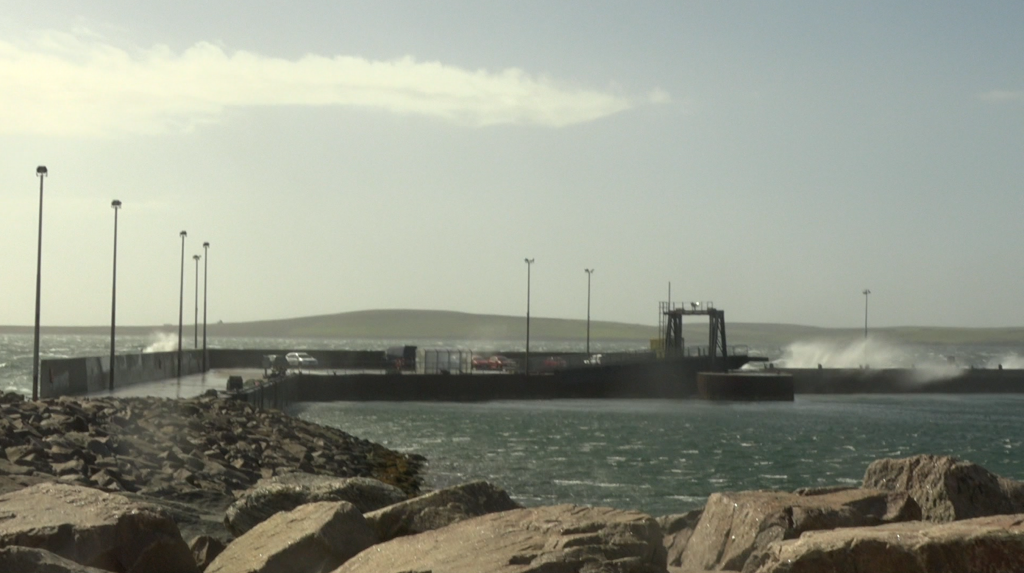
This frayed connection is not only physical, but social too, as many of the key decision-makers in health care do not have a lived experience on the island. Politically, isles are often spoken about in terms of vulnerability and resilience. Their vulnerability and resilience is only such in the context of relationship with a wider structure. The setting for this project then is not just Sanday, but anywhere where this dynamic is felt.
The potential for one concept to be spread across vast and varied landscapes.
Standardisation: In Mackay Browns short story, the whole country is being fed the same information and values. Yet the voice on the radio comes from the country’s capital city.
Centralisation: Dominant values and resources are rooted in one place that is inaccessible or unfamiliar to many. The voice on the radio speaks for the country’s experience, but the islanders are confused because from where they’re standing, things look different.
Communication and Dialogue: The locals try to talk back but realise the system is not designed in such a way that prioritises or enables two-way dialogue.
.
These issues carry implications about belonging. The locals are silenced, and their perspective is not recognised in the dominant narrative. However, where they’d previously had little concept of such a system, they become dependent on it.

Embodied vs disembodied experiences of space.
Communities can become dependent on systems that misunderstands their lived embodied experience of their space.
In Mackay Brown’s story, this misrepresentation is at first bemusing to the islanders but the one-way assertion of urban and standardised systems evokes much stronger feelings of anger and neglect when it comes to dictate their experience of more weighted issues.
The story is set in 1939 so we see this when WWII breaks out. Howie and others are deployed, firmly enmeshing the community collectively and personally in every bit of news that might now affect them.
Here we also see that communities’ misunderstandings around one another’s experience of landscape (urban and rural) creates a dynamic that becomes clearer and more weighted in the context of events and practices concerning the country as a whole.
The voice is a representation of a centralised institutional authority that umbrellas the island with a singular country-wide narrative without any resemblance of a physical presence there. By speaking for the country in such a way that doesn’t speak to the islander’s personal experience of it, it carries further notions about their belonging or centrality in the country.